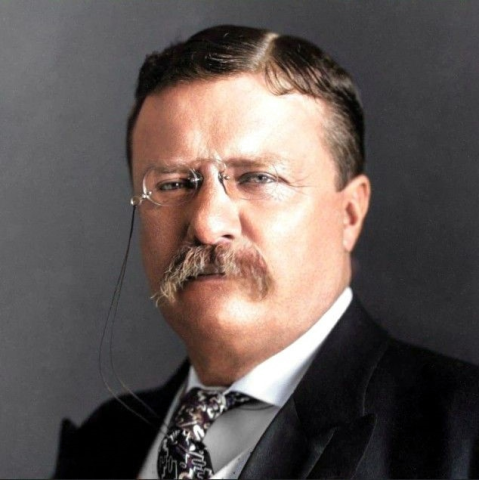
The first United States President, Theodore Roosevelt, to visit Kenya and Kiambu County
The visit to Kenya by Barack Obama as the 44th U.S. President in 2015 was political. However, when the first U.S. President visited Kenya before Kenya’s independence, the reason was really for spiritual purposes. He left America by ship and travelled for days with a purpose to come to the region now known as Kiambu County. He trekked through the great plains of Tsavo on his way inland to where there was a new mission station. We can therefore say that the first president of the United States to visit East Africa in what is now Kenya, came to Kiambu County.
At the end of the 1800s, between 1884 and 1909, events that can only be described as Divine projections were happening in two continents separated by both sea and land. The British had established a foothold in East Africa. The King of England at that time was Edward VII. The events leading United States President Theodore Roosevelt to what is now Kiambu County were the beginning of an invisible force which would propel Kenya to what it is today.
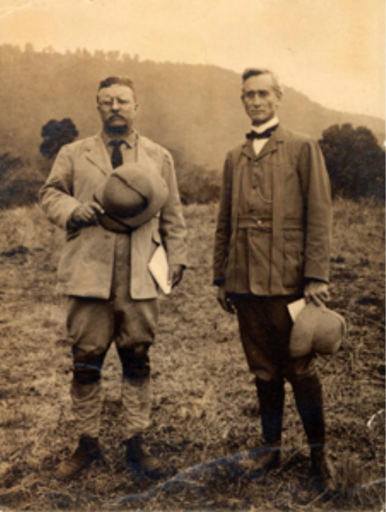
In the United States a man by the name Charles Hurlburt had become a very good friend of the U.S. President. They had met on several occasions and discussed the nature of British expansion and Hurlburt’s desire to travel to East and Central Africa as a missionary. His was a pure response to what Hurlburt considered a Divine call. He needed to fulfill what the Bible calls, “The Great Commission” of Jesus. Before Jesus Christ was taken to heaven in a cloud after His resurrection, He commissioned his disciples saying, “All authority has been given to me. Go ye therefore into all the world and make disciples, teaching them to observe all I have commanded thee, baptizing them in the name of the Father, the Son, and the Holy Spirit. I will be with you even to the end of the ages” (Matthew 28.18-19).
Charles Hurlburt wanted to be obedient to this call as a follower of Jesus Christ. He therefore shared his vision with President Theodore (Teddy) Roosevelt of the United States, who did not object and promised to support Hurlburt politically and financially. None of these men had travelled to Africa before and Roosevelt, a great conservationist and a game hunter saw this as an opportunity for him to set up camp in Africa through Charles Hurlburt, his missionary friend. Roosevelt used his political influence to secure land for Mr. Hurlburt. The British decided to give him the “useless” hills of the Escarpment above the Maasai plains given that the British were more interested in farming. They also wanted cedar trees, which they used in their magnificent parliament buildings and castles.
Hurlburt was given 14,000 acres, which covered what is now a railway station town of Matathia, the village of Mbauini, Kimende, and stretched all the way through Soko Mjinga down to the valley dividing Kijabe Mission and the old railway station of Kijabe Town. It cut through the edges of Mai Mahiu hills. It is here that Charlse Hurlburt built his mission calling it Africa Inland Mission Station, Kijabe. The land was uninhabited. The only inhabitants before the mission were, water buffalo, gazelles, leopards, lions, and other wildlife. Human activity was limited to bee hives put there by the Maasai of the Dorobo clan. They called the place ‘Kijabe’ because of the whispering winds. If you have been to Kijabe, especially in the evenings, you will hear the whispers of cold winds cutting through the vast cedar and pine trees in the nearby virgin forests.
Theodore Rooselvelt was the 26th president of the United States, serving from 1901 to 1909. At the end of his presidency, he decided to honor his promise to his missionary friend Charles Hurlburt. As mentioned, Roosevelt’s visit was not only political, but was also a spiritual journey. Not only had he convinced the British to give Charles Hurlburt land for his mission station in Kijabe, Kiambu County, he had done intervention on behalf of Mr. Hurlburt to have the King of Belgium Leopold II (The butcher of Africans), who was the registered autocratic owner of what was called Congo Free State, to give license to Hurlburt for a mission station in Rethy, Congo. According to history, the King of Belgium used Henry Morton Stanley, the great explorer to help him lay claim to the Congo (the modern-day Democratic Republic of the Congo).
Roosevelt arrived in Kijabe to see his missionary friend on his expedition to East Africa in 1909. While there, he laid the foundation stone for Africa Inland Mission at Kijabe, which is standing there still. Roosevelt also travelled around Kenya for game hunting and promised to help build schools in Kijabe, giving money for Hurlburt to start the famous Kijabe Hospital and what became Rift Valley Academy at Kijabe Mission Station. Before calling it Kijabe Hospital, Charles Hurlburt called it Theodore Hospital. The Kijabe virgin forest owes its existence and protection to the conservation philosophy of Theodore Rooselvelt, who is known in America as a conservationist who preserved land for national parks that could not be used for commercial purposes.
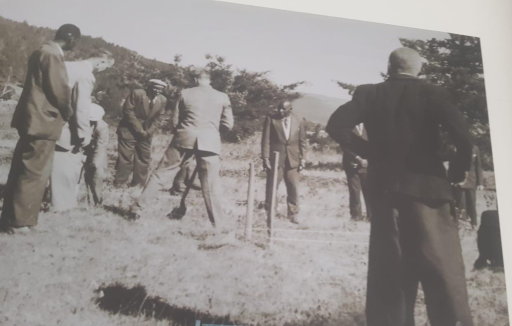
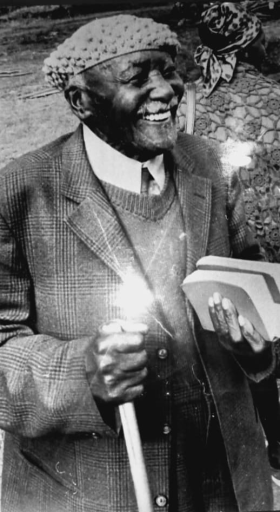
The foundation stone of Kijabe Mission and hospital Station was witnessed by many. Among them was a pastor by the name Yohana Nyenjeri Njoroge. He not only met Theodore Rooselvelt when he visited in 1909, but was the beneficiary of Kijabe’s programs. He was among the first graduates of the Bible Seminary at Kijabe Mission Station in Kiambu County.
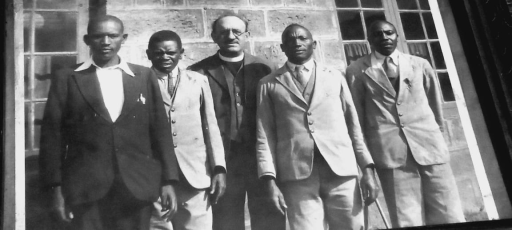
Theodore Rooselvelt was the first U.S. president to visit East Africa, Kiambu County and Kijabe. Through him Kenya has become what it is. From the Mau Mau movement, Kenyan health care, education, and American foreign policy towards Kenya, Theodore Rooselvelt is a historical marker. How, you ask? Join us next week to understand the complexity of Kenya’s independence movement, and the influence of Theodore (Teddy) Rooselvelt.
Teddy Njoroge Kamau (PhD). Harriett’s Bluff, Kijabe, Kiambu County.
###
Teddy Njoroge Kamau is a retired professor of Western Philosophy, Theology of St. Paul, and Anthropology. Also a retired scholar in Behavioral Psychology (research), Dr. Kamau authors a syndicated column in Diaspora Messenger and has served as a radio and television presenter with Biblia Husema Studios in Kijabe.





That’s great to enlighten us mostly people living in kiambu.kijabe is a holly town as by now.
Thenx much for this platform.it keeps us enlightened